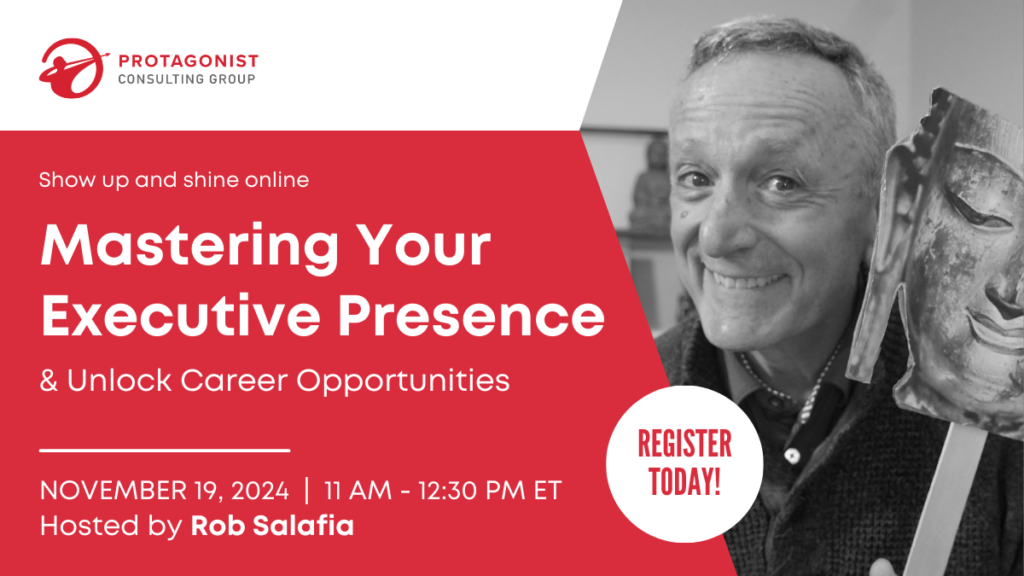
I am always amazed at the amount of time executives spend organizing and creating the perfect PowerPoint deck for their strategic communication, presentation, or pitch. They will go to great lengths to create charts packed with data — so much so that the slides are impossible to read without a magnifying glass from a close distance, let alone from the tenth row. Then, they put all of their materials into their briefcase and vow to practice the rest of their presentation in the cab ride on the way to the conference.
How do you think that will turn out?
I’ve been asking that question for more than two decades. And for most of those years, the answer was predictable: the content was overloaded, the delivery was underprepared, and the message didn’t land. The executives who got this right — who invested in how they delivered, not just what they delivered — were always the exception.
Now, AI has made this problem worse. Not better. Worse.
The New Version of an Old Mistake
Today, an executive can produce a polished deck in a fraction of the time it used to take. The data visualization is flawless. The talking points are crisp. The executive summary writes itself. What used to take a team three days now takes an afternoon.
And here is the trap: because the content comes together so quickly and looks so professional, there is an even greater temptation to believe the job is done. The deck is perfect. The data is airtight. Why would I need to practice?
But the deck has never been the job. The job is what happens when you stand up in front of the room.
Can you read the energy of the audience? Can you adjust in real time when the CFO’s body language says she’s not buying the third slide? Can you pause — really pause — and let the most important point land? Can you handle the question nobody warned you was coming, and respond with composure instead of deflection?
No AI tool on earth can do that for you.
What Performers Know
For the actor or well-trained performer, our approach is the inverse of the executive with the overstuffed briefcase. We learn that it is the nuance of how we say what we say that makes the difference. We spend hours in rehearsal — not perfecting the script, but perfecting the delivery. The timing. The pauses. The physical presence. The way you hold a room with your eyes before you’ve said a single word.
When I was a performing artist, I quickly learned that the audience doesn’t remember your content. They remember how you made them feel. A street performer at Faneuil Hall doesn’t have a captive audience. If you don’t connect in the first thirty seconds, people walk away. There are no polite nods, no obligation to stay. You earn every moment of their attention with your presence — or you lose them.
The boardroom is more forgiving, but the principle is identical. Your team, your board, your clients — they will remember how you made them feel long after they’ve forgotten slide seven.
The Real Risk of AI-Assisted Confidence
There is a deeper issue here, and it goes beyond presentation skills.
When AI produces a polished, confident-sounding output, it can be tempting to trust it at face value. The analysis looks right. The recommendations sound reasonable. The language is authoritative.
But I’ve watched enough leaders present AI-assisted work to know what happens when someone hasn’t truly interrogated the material. The first probing question from a board member, and the composure cracks. They can’t explain the assumption behind the third recommendation. They can’t defend the methodology. They defer to the slide instead of engaging with the person asking the question.
The executives who get this right are the ones who treat AI as a starting point, not a finished product. They bring their own judgment, their own experience, and their own presence to the material. They can stand behind every claim because they’ve thought through it themselves — not because a tool told them it was correct.
That combination — sharp content refined by human judgment, delivered with authentic presence — is what makes a leader credible. Either half without the other falls short.
A Practice, Not a Performance
I invite you to try something before your next important presentation or meeting. Once your content is ready — whether you built it yourself or with AI — close the laptop. Stand up. And practice delivering your three most important points out loud, to an empty room, with no slides behind you.
Notice what happens. Where do you rush? Where do you lose confidence? Where do you reach for the data instead of trusting your own voice?
Those are the moments that matter. Not the slides. Not the polish. The moments where you are standing in front of other human beings, asking them to trust your judgment.
AI can build the deck. Only you can hold the room.
Rob Salafia is an executive leadership coach, lecturer at MIT Sloan School of Management, and author of Leading from Your Best Self (McGraw-Hill). He is the founder of Protagonist Consulting Group, helping leaders at organizations including AstraZeneca, American Express, and Johnson & Johnson develop executive presence and authentic connection.